
Indian banks are still in the early stages of understanding the complexities and opportunities arising from the proposed revised capital adequacy framework, popularly known as Basel II.
In its mid-term review of Annual Policy for FY07, RBI said that this relates to standardised approach for credit risk and the basic indicator approach for operation risk under Basel II.
The European Union's push to introduce new capital requirements for banks through the Basel-II (Revised international capital framework) pact may hit specialist commodity traders, such as large oil companies.
Majority of banks in the country are yet to set up specific budgets for Basel II guidelines, although the industry is confident of meeting the RBI guidelines in this regard, a new study reveals.
The Reserve Bank of India has set up an experts committee to implement Basel II accord by 2006 to strengthen the financial health of banks by adopting globally accepted norms for capital adequacy.
The Indian banks are not prepared to implement the stringent Basel-II norms including that of capital adequacy and non-performing assets in toto by 2006, according to the Federation of Indian Chambers of Commerce and Industry survey.
The Reserve Bank of India will soon initiate discussions with Indian banking entities to introduce Basel-II accord, prudential norms including risk management and capital adequacy guidelines, for smooth transition to the new regulatory framework.
An early action to allow domestic banks to participate in the commodity markets would not only help in improving their competency but would also help in develop their trading and product development skills in commodity derivatives.
BMO Financial Group, a leading financial service provider in North America, has selected i-flex's Reveleus Basel II solution to accelerate its Basel II compliance efforts.

The Indian banking sector could be due for a rise in profitability after several quarters of net interest margin (NIM) compression. The Q2FY26 results suggest NIMs have bottomed out.
Enterprise software company Oracle India would look for business opportunities in banking and healthcare segments during the next one year, managing director Shekhar Dasgupta said.
Indian banks, which have strengthened their balance sheets, will trigger mergers and acquisitions to conform to stringent Basel II norms coming into effect in 2007.
The Centre on Monday said nationalised banks, which were provided equity as part of capital restructuring need not return it.
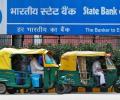
State Bank of India (SBI), the largest lender in the country, has launched a share sale to institutional investors to raise upto Rs 25,000 crore, the biggest qualified institutional placement (QIP) so far by an Indian firm, and has set a floor price of Rs 811.05, which is at a 2.5 per cent discount on Wednesday's closing price.
Through RAROC and EVA, banks can establish a risk management culture that can create competitive advantage and improve shareholder value.
The huge losses suffered by major banks recently, particularly in the United States and the United Kingdom, have brought to the fore the weaknesses of the architecture of the Basel II capital ratios, and have also raised questions pertaining to the wisdom of fair value accounting norms.

Low cost of funds and low credit growth have meant unprecedented levels of capital adequacy ratios (CARs) for banks.
The sharp rise in the number of structured products rated caused the revenues of leading rating agencies to jump. The quality of these exercises is today reflected in the vastly devalued status of those products. Rating in India can come into its own when there is lot more of debt to be rated, creating enough volumes for the agencies.
Both the issues will be floated simultaneously either this month or the next month, subject to regulatory approvals, ICICI chief financial officer Vishakha Mulye said.
The current fiscal could become a phenomenal year for follow-on issues (FPOs) with companies lining up plans to raise anything in the range of Rs 45,000 to Rs 50,000 crore (Rs 450 - Rs 500 billion) in the coming months.

The 97th Annual Academy Awards are live at the Dolby Theatre in Hollywood, California. Here's a quick look at the winners.

State Bank of India (SBI), India's largest lender, is looking to raise Rs 10,000 crore through 15-year infrastructure bonds as early as next week, said multiple sources aware of the development. Market participants expect a coupon in the range of 7.15-7.18 per cent for SBI's upcoming infrastructure bond issuance. This comes as demand for longer-tenor papers has remained strong in recent domestic capital market offerings.

'The approach today is, instead of giving loans to 100 MSMEs, let us give one loan to a big-ticket corporate.' 'And so many of these big fish deceived the banks and the banks are in the doldrums now with high NPAs.'

The State Bank of India has proposed to the RBI to allow it to charge mark-to-market losses on its balance sheet.

Indian banks would require additional Rs 8 lakh crore to meet the minimum capital adequacy under Basel III norms, ratings agency Crisil has said.

Says licensing of new banks should be a continuous process instead of the current stop-go system

Tamil Nadu-based Lakshmi Vilas Bank (LVB) with pre-independence lineage on Friday lost its identity after its merger with the Indian subsidiary of Singapore's DBS Bank. The debt-ridden 94-year old old bank's fate was sealed with Union Cabinet headed by Prime Minister Narendra Modi approving Scheme of Amalagamation on Wednesday.

Mutual fund houses hold Rs 3,400 crore of Yes Bank's 'riskier' bonds. Reliance MF, Franklin Templeton MF and UTI MF account for bulk of these exposures.

Is the RBI unable to accept with grace that beyond 55, one can have the ability to head the compliance functions in a bank, asks Tamal Bandyopadhyay.

It has been a year since the Reserve Bank of India (RBI) initiated prompt corrective action (PCA), an exercise that puts weak banks under central bank scrutiny, against the 94-year-old Lakshmi Vilas Bank (LVB). But recently, this low-profile Chennai-headquartered bank found itself attracting some unwonted publicity when 60 per cent of its shareholders voted against a proposal to re-appoint seven directors, including one of the promoters, K R Pradeep (who holds around 2 per cent), and the company's managing director & chief executive officer S Sundar.

Privatisation or consolidation into half a dozen large banks might not rescue public sector banks from the crisis they find themselves in.
